

Editor's note: This month only – grab $5 off five classic ebooks in the November deal. Click the link for details. Thanks for reading, Andrew.
Another theme connecting my previous two articles about visual complexity and visual context is that of finding a rich environment to work in. A rich environment is one that give you lots of photographic opportunities. It changes – both during the day and over the weeks and months.
That’s one of the reasons that flower and garden photography is so rewarding. Gardens are a rich environment. You can spend hours with your camera in a garden packed full of flowers and interesting plants. They change with the seasons, and evolve as gardeners try new planting schemes and layouts.
It explains why travel photography is so popular, especially when you visit a place where lots of life is lived on the streets. The changing environment offers rich and varied opportunities for photographers. Places change – during the day and with the seasons and years. As the world changes, your photos gain in historical value by showing somewhere as it existed ten, twenty or thirty years ago.
Rich environments reward repeat visits. You can return over and over and find something new to photograph each time. They let you explore new ideas and new techniques.
A rich environment helps you grow as a photographer and a person. It’s a process I’ve observed with my own creative practice when I started photographing flowers and gardens over the last two years. My photography has improved (through constant practice). But I’ve also grown creatively and personally. I’ve learned more about flowers and gardens. I understand the year’s cycle, and how gardens change over twelve months, much better. I redesigned my own garden, putting the things I’ve learned about horticulture and garden design into practice.
When I was younger and traveling around South America, I found many rich environments for photography. Immersing myself in the environment, talking to locals and learning to understand the places I visited from their point of view helped fuel personal growth.
It’s interesting how much my approach to flower and garden photography has changed over two years. I haven’t changed my equipment, or the techniques I’ve used. The only thing that’s changed is the way I see. With my camera, I look for visual complexity and visual context. In Lightroom, I go for a muted, natural developing style. The two go together to create a style that’s in development.
The gardens at Knightshayes Court
Let me show you what I mean by comparing two sets of photos I made in the gardens at Knightshayes Court, some eighteen months apart. Knightshayes is a National Trust property in central Devon. The gardens are stunning, and worth a visit with your camera any time from late March to late October. They’re a rich environment for photography, and the time I’ve spent there has rewarded me with manhy beautiful images.
Here’s a selection of photos from eighteen months ago. There’s a mixture of color and black and white. I shot the close-up photos with large apertures. There’s not much depth of field, and no visual context. The compositions are bold, strong, graphic. They work, but there’s no visual complexity.
Learn more: Creative Process: Photographing Gardens In Black And White
There are hints of what I do now, in the photo of a daffodil with bluebells in the background. But thanks to the shallow depth of field they’re nothing but blobs of blue. You can’t tell what they are. If I was there now I’d stop down and you’d see the bluebells. Back then it was the beginning of something, not a developed tool.


Here’s a selection of photos I made a few weeks ago. I was lucky – there was a stunning display of dahlias and it was impossible not to make good photos.
You can see how different the images are. There’s lots of visual context and visual complexity. There are flower photos with a building in the background (I explored this idea last week). There are juxtapositions of different plant types.
One of the photos shows the seed head of an agapanthus with a pink flower. I’ve fallen in love with agapanthuses this year. I like their brilliant floral displays, and their seed heads in autumn. I’ve planted some in my garden, ready for next year. This awareness of a particular flower shows how my understanding of horticulture and planting has developed. In turn, it’s influenced my flower photography.


When I look at these two sets of photos, it’s as if they were made by different photographers. And they were – the photographer I was eighteen months ago and the photographer I am now.
Learn more: How Constraints Make You A Better Photographer
The importance of a rich environment
I hope these photos help you see how important a rich environment is for your photography. The question is, do you have a rich environment to work in? And if you don’t, how are you going to find one?
It’s not an easy question to answer. Some photographers roam the streets. Others travel. Some grow flowers in their own back yards to photograph. Others get into food photography, which is something you can do at home. Others create photo projects.
Some photographers find new ways to photograph places close to home, like making photos at night, using black and white or working with analog processes like cyanotype. Some explore forests. Others, like me, explore gardens. However you do it, finding a rich environment for photography is an important part of your creative and personal journey.
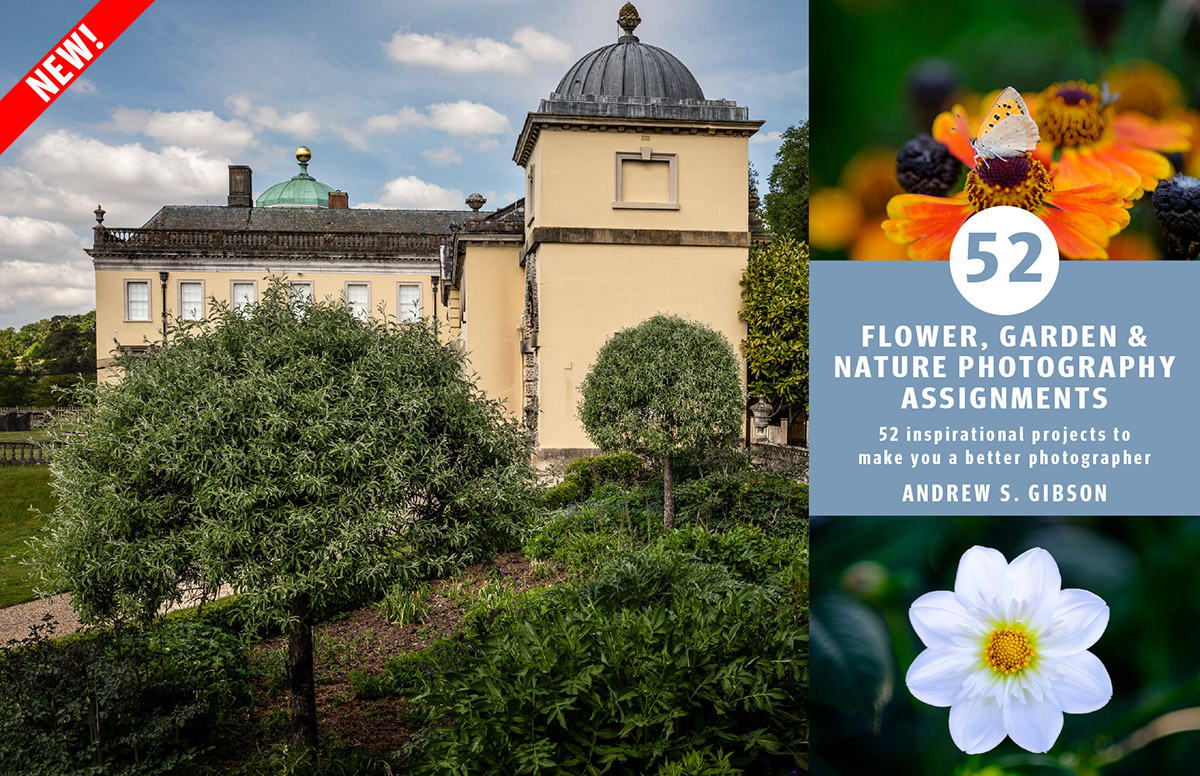
Further reading: 52 Flower, Garden & Nature Photography Assignments
Once you’ve found a rich environment like gardens, you need photography ideas that help you make the most from it. That’s why I wrote my book 52 Flower, Garden & Nature Photography Assignments. It has enough ideas and inspiration to keep you busy for a long time to come. It’s worth checking out, and you can buy it today for just $15. Click here for the details.
Just curious? Click here to download a free 20 page sample.

